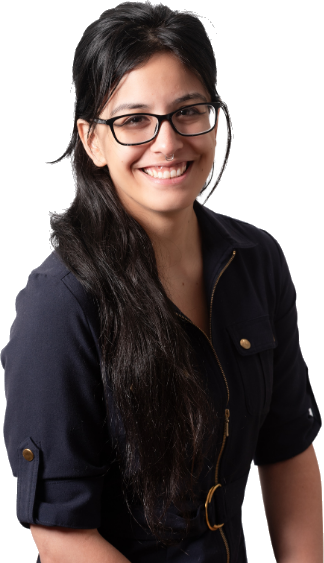
Kia ora · San Antonio, TX · Māori operations technologist
Operations, built with aroha.
I build the automations and AI agents that mission-driven micro and small businesses, agencies, and nonprofits run on, then build the operations underneath so they actually hold. The technical skill to make the thing, the operator's judgment to make it last.
Tick the ones that hurt.
Two or more? That's exactly the work I do.
How I work
It's the first thing I ask. Most people open their systems and feel some mix of anxious and overwhelmed. I want you to end up calm and grounded, ready to do the mahi.
However you answer that, my part starts the same way: with empathy and discovery, always. I lead with whakawhanaungatanga (relationships): I ask the personal questions, and I hold boundaries without drawing a hard line in the sand. If you show up late, or a coffee chat runs long, or life cancels a meeting, that's all fine. I'd rather you feel met than managed.
The tools are meant to serve that, not the other way around. Most of what makes a business run well isn't flashy: clear processes, systems shaped around how real brains actually work (mine included), the quiet structure that stops things slipping. I bring in a tool only when it genuinely earns its place, because every tool costs something. Sometimes that's AI taking the repetitive grind off your team. Just as often, it's something far simpler.
I do this work to clear the mental fatigue, and to make room for the good kind of friction: the creative, genuinely hard work that energises people instead of draining them.
“He aha te mea nui o te ao? Māku e kī atu, he tāngata, he tāngata, he tāngata.” What is the most important thing in the world? I will say: it is people, it is people, it is people.
What I do
Whether you want someone to build it, stay alongside you, or teach your team to run it themselves, there's a way to work together that fits.
For teams who want to build their own automations and workflows but don't know where to start. I look at how you work, teach you which automations and AI agents are worth building, and hand over the plan and tools to run it yourselves. Then I step back, because the point is your team standing on its own.
Best for capable teams who want to build the muscle in-house.
Your people have the hands. I keep the whole thing moving, the cadence and the momentum, and act as your quality gate: the senior eye that catches what's off before it ships. You build the muscle. I make sure it's built right.
Best for teams with capable people who need discipline and a senior eye on the work.
For when you just need it handled. I build the whole thing, the automation or the AI agent and the system around it, document it properly, and hand back something that runs. Or I stay on to hold and maintain it as a fractional part of your team.
Best for leaders who need it done well and want to trust one steady person with it.
My process
I approach your systems the way I approach anything I make by hand: patiently, and built to last. The same process every time, because it works.
Empathy and discovery first. I interview your team, map how work really flows, and find the constraint that sets the pace of everything.
I design around the system, starting where it matters most. Small changes first, foundations before flash.
I build the automations, AI agents, and workflows, with an undo for everything, and each tool earning its place.
I train your team to run it, and to judge it. Knowing when to trust AI output is the real skill.
Documentation, measures, and upkeep, so it holds and keeps improving after I leave.
How I think about AI
Here's what a decade of operations work taught me, and what the research now confirms: AI amplifies whatever it lands in. Give it a team with clear processes and shared context, and it makes them faster. Give it chaos, and it makes chaos faster.
DORA's 2025 study of nearly 5,000 technology professionals found that the biggest returns from AI come from the system around it: how clear your workflows are, how healthy your data is, whether your team knows what's expected of them. The tools themselves came last.
So I start with your people and how work actually flows through them. We find the real bottleneck, fix the foundations, and bring in AI where it serves the humans behind the screens. The tools come last. That order is the whole method.
“A bad system will beat a good person every time.” — W. Edwards Deming
Free download
Before you buy a single license, there are 7 things research says decide whether AI helps your team or hurts it. I turned them into a plain-language checklist you can score your own organization against in 20 minutes.
Get the checklist (PDF)Selected work
Grouped by client, because the strongest work compounds over time. Clients anonymized, outcomes real.
My deepest engagement · five builds, from the support desk up
Customer support
When I arrived there was no real support operation. I built the whole function from scratch: a training manual, SOPs, clear escalation paths, the help desk itself, and a weekly huddle to keep it sharp.
I wrote the training manual and the SOPs so a new hire could get up to speed without shadowing someone for weeks. Escalation paths meant the hard tickets reached the right person fast instead of bouncing around. The weekly huddle kept the team surfacing problems early, while there was still time to fix them.
Resolution time dropped from 48 hours to under 24, and customer satisfaction climbed in the first quarter.
Also built for them
From the ground up · the operating system, then the automations on top
Operations infrastructure
Work lived in scattered docs and colour-coded flags only a few people understood. I interviewed every team, built their ClickUp workspace from nothing with a clear structure and per-team views, replaced the flags with a status-based workflow, and set a steady Mon/Wed/Fri rhythm.
I started with interviews, one per team lead, and mapped how work actually moved between teams. Views are scoped to each team, so nobody scrolls past work that isn't theirs, and statuses carry the handoffs, so a task moving between teams needs no meeting. The Mon/Wed/Fri rhythm gives the week a shape the whole team can see. I wrote the runbook, so it survives without me.
Cross-functional visibility and a real operating cadence. For the first time, everyone could see the work.
AI workflow build
With the operation finally running smoothly, we went after the biggest time sink: publishing. I built a 30-plus-step pipeline on Zapier and the Anthropic Claude API that takes a client's Word doc, turns it into structured content, hosts the images, logs an audit trail, and delivers a finished CMS draft, with a validation layer so nothing breaks silently.
A writer drops a Word doc in a shared folder and the pipeline takes it from there. A validation layer checks every field before anything moves: missing alt text or a broken heading stops the run and flags a human. Every run logs an audit trail, and the finished draft arrives in the CMS ready for review. Nobody supervises it, and that was the test that mattered.
30+ minutes saved on every post, running across all client accounts unsupervised.
Also built for them
One focused engagement
Cost & systems audit
The business was paying for 30+ tools, many overlapping or unused, but cutting them felt risky. I audited the whole stack, made the case tool by tool, and earned the founder's buy-in before changing anything, so the cuts landed with zero pushback.
The audit listed every tool with its cost, who actually touched it, and what would break if it vanished tomorrow. I took the findings to the founder first, because a cut like this dies the moment it feels imposed from the side. Every migration shipped with an undo: exports taken and data archived before anything got switched off. Nobody asked for a single tool to be reinstated.
More than half the tools gone, hundreds of dollars back every month, and the team never missed a single one.
Kind words
“It would've taken a year to accomplish all that you've built in a few weeks.”
A client, on a program built from scratch“We have complete confidence in our ability to excel, thanks to the invaluable tools, knowledge, systems, and resources that Françoise has helped us establish.”
A creative company, on the systems we built together
“Interacting with Françoise for just 30 minutes, I felt helped. I felt like I was speaking with someone who actually made the effort to learn more about me.”
A client, after one 30-minute call
“Always thinking of ways to build efficiencies and quality. We are so freaking lucky to have you here!”
Leadership at a partner agency
“Françoise was so action oriented, thoughtful, and had amazing customer service skills!”
A client, after a weekend of hands-on support
“Very impressed by your project management and comms.”
A client partner, mid-project
“Extremely clear, kind, forthright, proactive, organized… truly adds the human dimension back into the process.”
A colleague, on working with her
“Thank you for writing such a clear doc! That feels extremely helpful both for shared ownership and diverse perspectives, and for cross-training.”
A teammate, on her documentation
“Thank you for your leadership and your commitment to excellence.”
A nonprofit CEO
“A real change maker, who’s helped many people grow their own ventures responsibly and well. The field is so fortunate to have her.”
An industry peer
Let's talk
I take the tangle and make it hold. There's room for just a handful of clients at a time, so tell me what you're working on. No pressure, no pitch.
Request an intro callor email kiaora@francoisedanoy.com
 Françoise Danoy